How it works
The numbers are the controller.
Page Players isn't a choose-your-own-adventure and it isn't a role-playing game. It's closer to walking around inside a drawing.
01 · Look
Every page is a place.
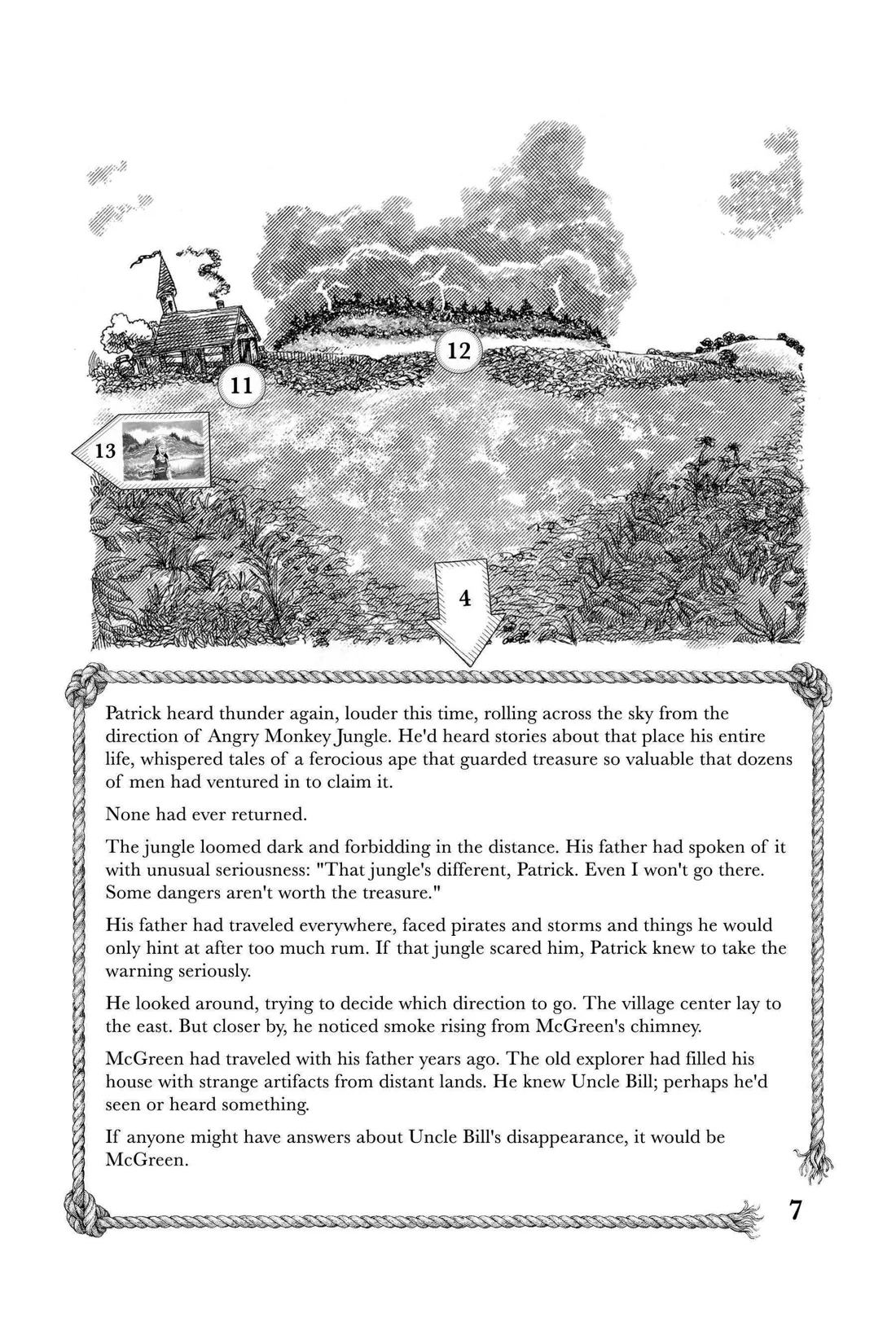
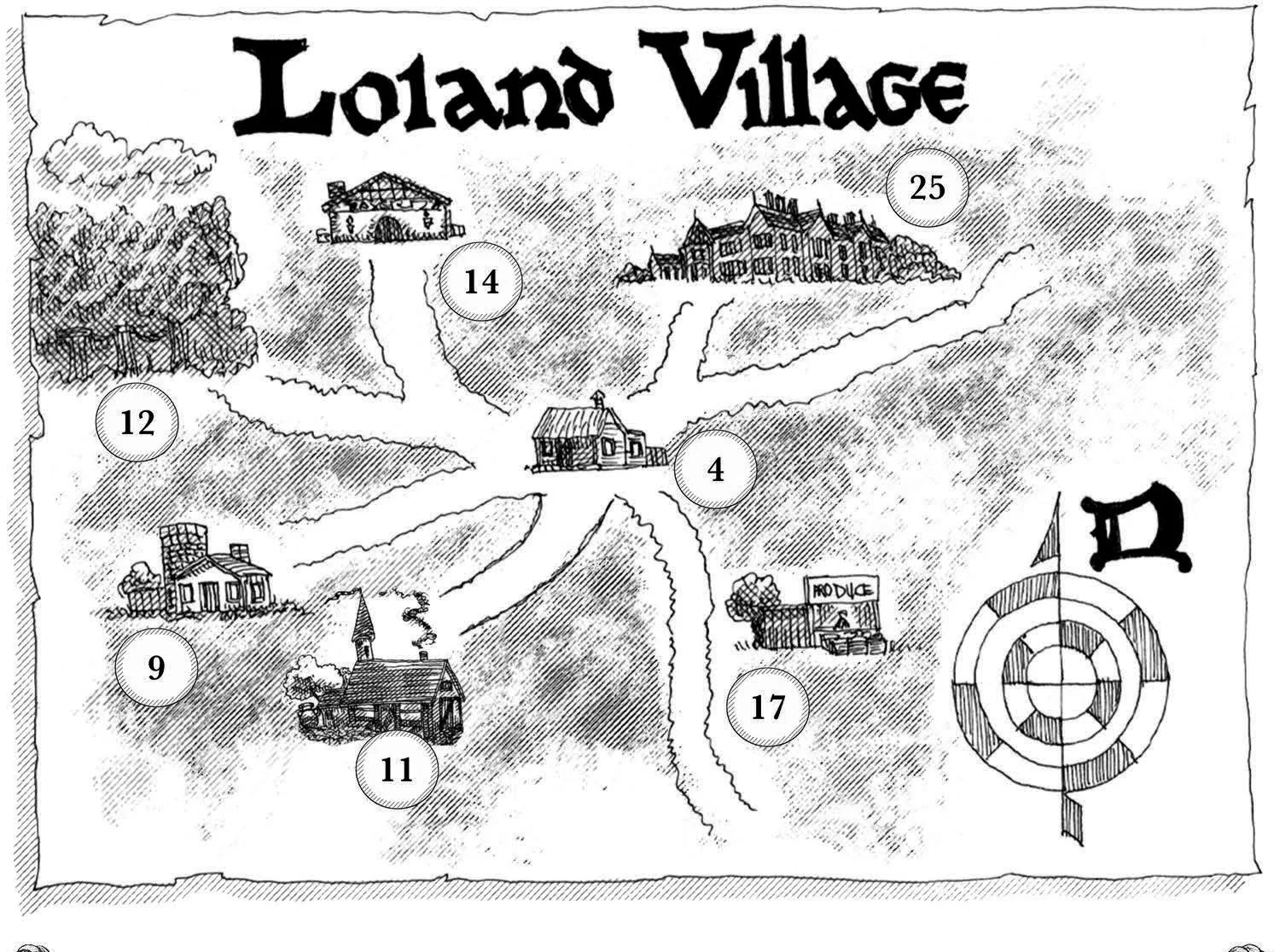
You don't choose your next move from a list at the bottom of the page. You look at the picture. The full-page illustrations are dense with detail, and hidden in that detail are numbers: on a door, a ladder, a cave mouth, a path through the reeds, a trapdoor in a tavern floor.
Each number is a page. Turn to it and you're standing there. That's the whole control scheme.
Because you're navigating visually rather than reading through options, the book moves at the speed you do. Some players tear through a village in five minutes. Some spend twenty minutes in one room because they're convinced there's something behind the barrels. Both are correct.
02 · Move
Try it.
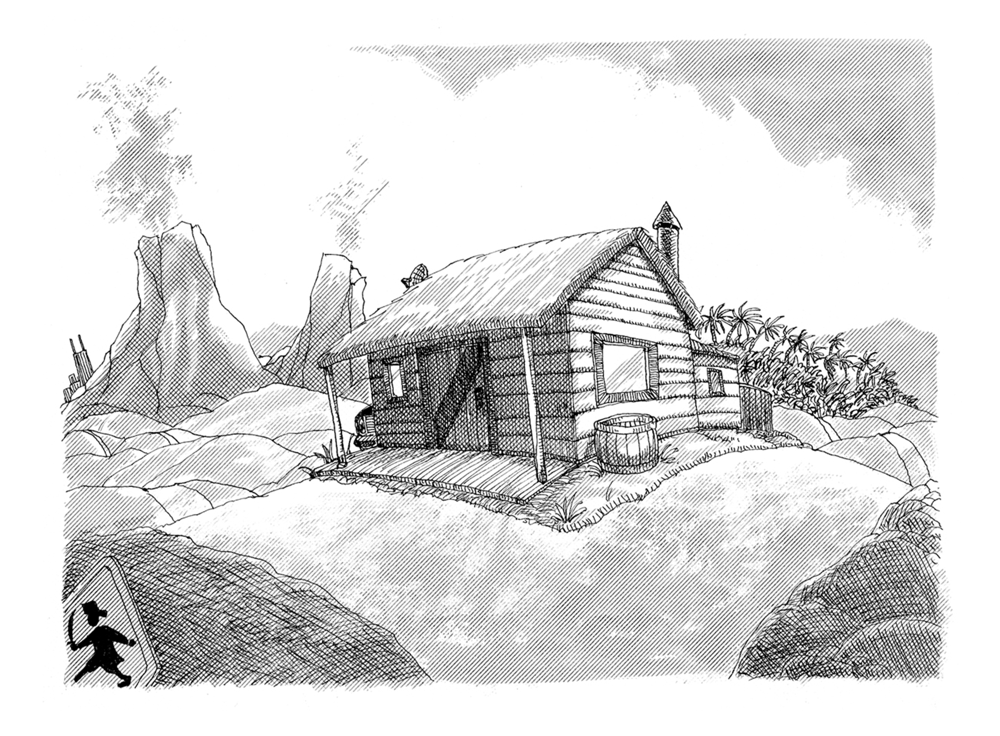
The first seven pages of Patrick and the Magic Spyglass, with the real markers in their real places. Click one to go there, the same way you would with the book open in your lap.
Page 1
Patrick Dibsworth woke with a headache and no memory of falling asleep.
He sat up slowly and touched the lump above his temple. It was tender, about the size of a quail's egg. The last thing he remembered was reading by candlelight, and now morning sun was streaming through the window.
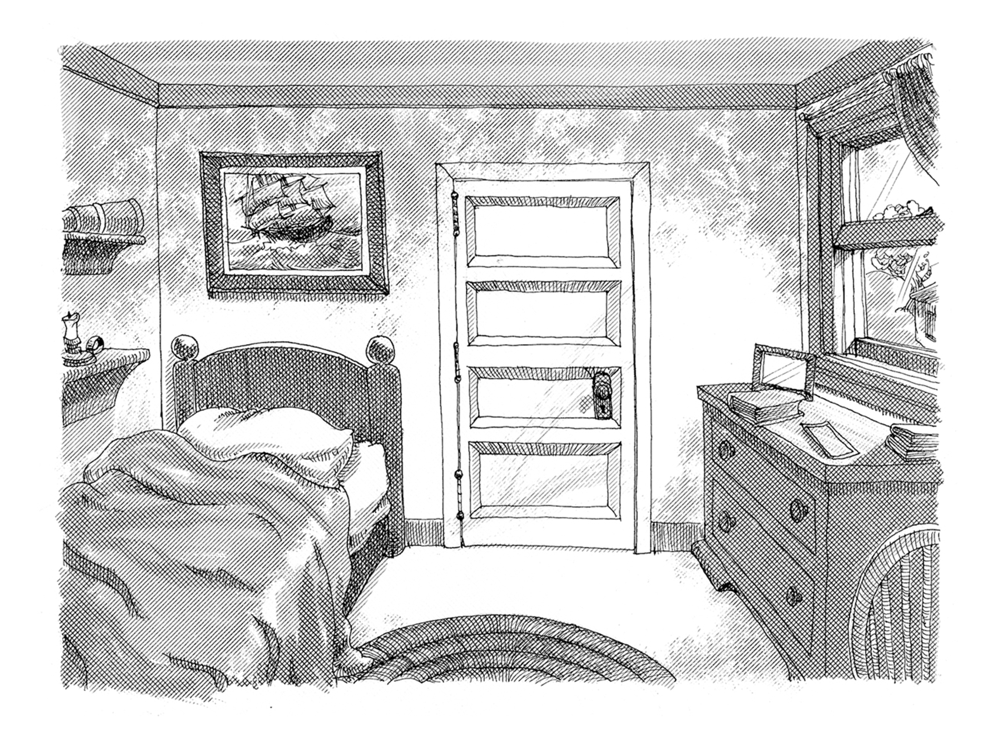
His bedroom looked the same as always. The painting of the merchant vessel hung above his bed, its sails full of wind. His maps were rolled on their shelf, books stacked on the dresser. Nothing to explain the lump on his head or the hours he couldn't account for.
Patrick's hand went instinctively to his pocket, where a small gold coin sat heavy against his leg. Still there. His mother had given it to him the night she died and he never let it out of his sight.
“Uncle Bill?” Patrick called.
No answer.
Uncle Bill was always home at this hour. He was a man of routine, the sort who ate the same breakfast every morning and checked the door locks twice before bed. Patrick called again, louder this time.
Nothing.
He crossed to the door, still rubbing his temple. He was halfway across the room when something on the dresser caught his eye, something that definitely hadn't been there the night before.
Page 2
Patrick had always been fascinated with pirates. Some boys his age were mad about knights or dragons; Patrick preferred sea captains and buried treasure. He'd spent hours in Loland's small library, memorizing the names of famous ships. His father had encouraged it, sitting with him by the fire and telling stories of his own adventures at sea.
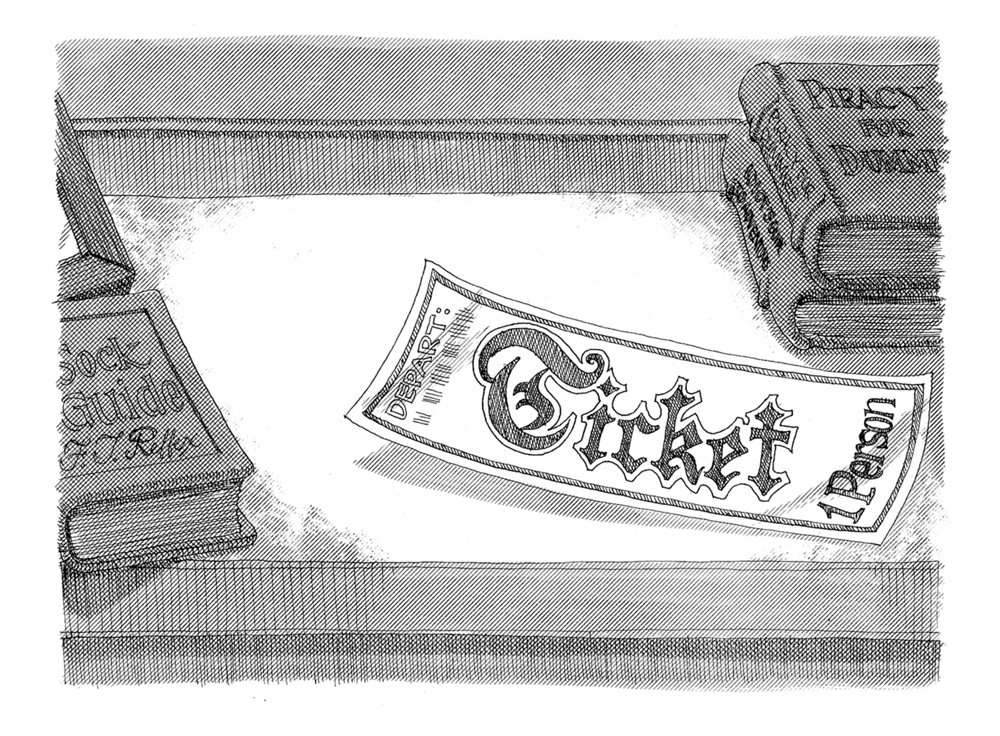
The object on the dresser was a ticket. Thick parchment, faded ink, elaborate script. Patrick picked it up and read it twice.
Passage for One aboard The Maiden's Revenge, departing Port Chesterton in three days' time.
Port Chesterton was nearly a full day's journey down the coast.
Patrick turned the ticket over. It hadn't been on his dresser last night. Someone had come into his room while he slept and left it for him to find.
Was this where Uncle Bill had gone? Had he simply boarded a ship and left?
Uncle Bill was odd and secretive, but he wouldn't just abandon Patrick. Would he? The man had never been warm, not since he'd moved in two years ago when Patrick's father disappeared. Sometimes Patrick caught his uncle watching him with an expression he couldn't quite read.
He slipped his hand into his pocket and felt the coin's familiar weight, then wondered what to do next.
Page 3
Patrick stepped into the narrow hallway, the floorboards cool beneath his bare feet.
“Uncle Bill?” he called again, more urgently this time.
The house remained stubbornly silent. The air itself seemed heavier somehow, as though the very walls were holding their breath.
Then he heard it: a sharp snapping noise from the direction of the kitchen, followed by what sounded like something being dragged across the floor.
Patrick froze. Uncle Bill wasn't the sort to make a racket; the man moved about the house like a ghost, appearing and disappearing without so much as a creaking floorboard.
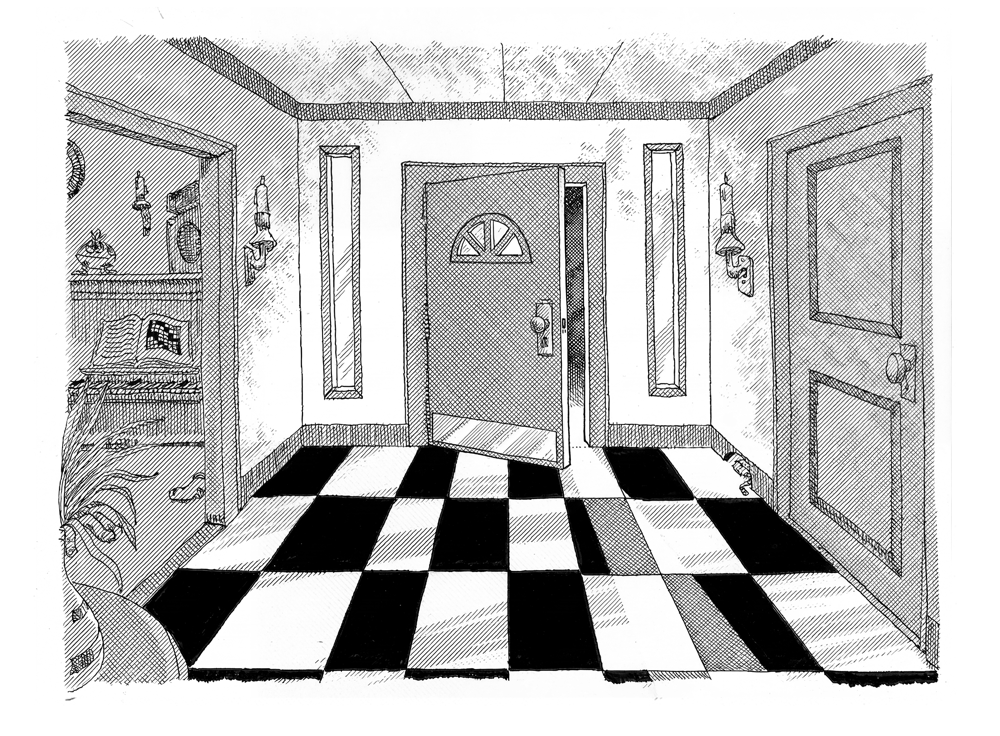
Morning sunlight streamed through the windows at the front of the house. Patrick edged forward, trying to peer around the corner toward the kitchen, when something else caught his attention: the front door stood slightly ajar, swinging gently in the breeze.
Uncle Bill never left the door open. Never. He checked the latches twice, sometimes three times before bed. Patrick had always thought it strange, the way his uncle obsessed over locks and bolts, as though he expected someone to come looking for them.
Patrick's mouth went dry. Whatever had happened here, Uncle Bill was either in terrible trouble or had left in a considerable hurry.
Page 4
Patrick stepped outside and looked at the small cottage properly. It was a modest place with weathered shutters and a thatched roof that Uncle Bill had been meaning to repair for months. In the morning light, it looked perfectly ordinary, and yet something felt wrong.
A low rumble echoed across the sky, and Patrick's gaze snapped toward the distant mountains. Dark clouds gathered above the peaks. Beyond them lay Angry Monkey Jungle, a place his father had spoken of only in warnings. “Never go there, Patrick,” he'd said once, his face grave. “Some places aren't meant for curious boys.”
Patrick felt a sharp pang of longing. He missed his father terribly. Two years had passed since George Dibsworth had vanished without a trace. His father had simply gone out one evening and never returned. Uncle Bill had moved in the following week, claiming family duty, though Patrick had barely known the man before that.
It was peculiarly quiet this morning. No birdsong, no distant voices from neighboring houses. Just an eerie stillness that made Patrick's skin prickle.
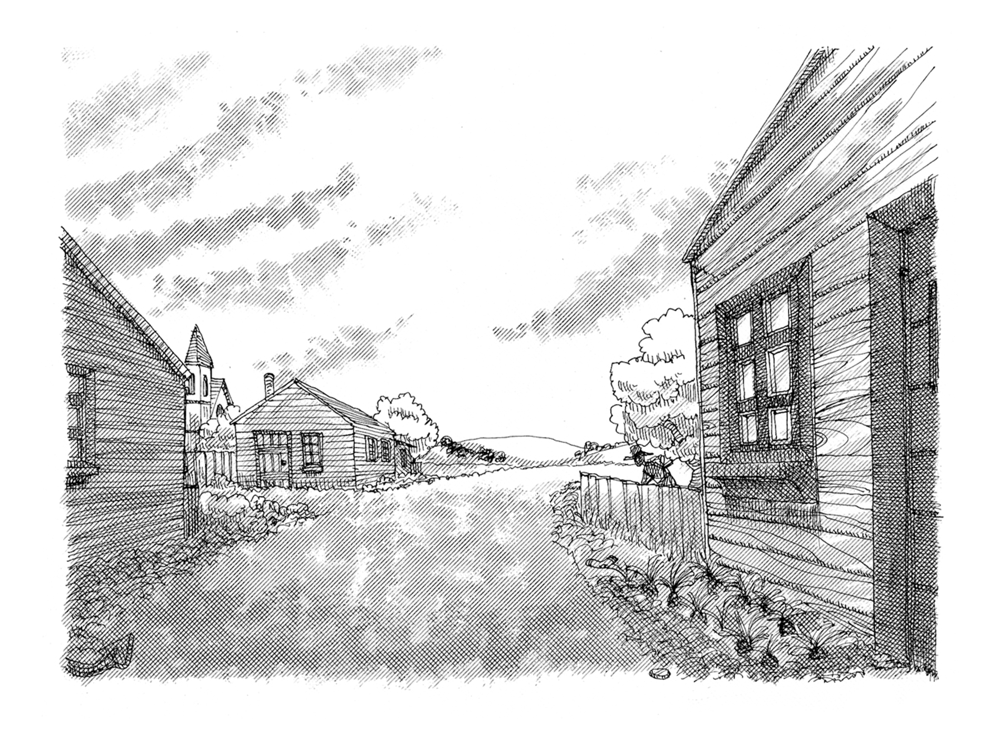
He glanced back at the jungle, then toward the path into the village. Perhaps someone in Loland had seen Uncle Bill.
Page 5
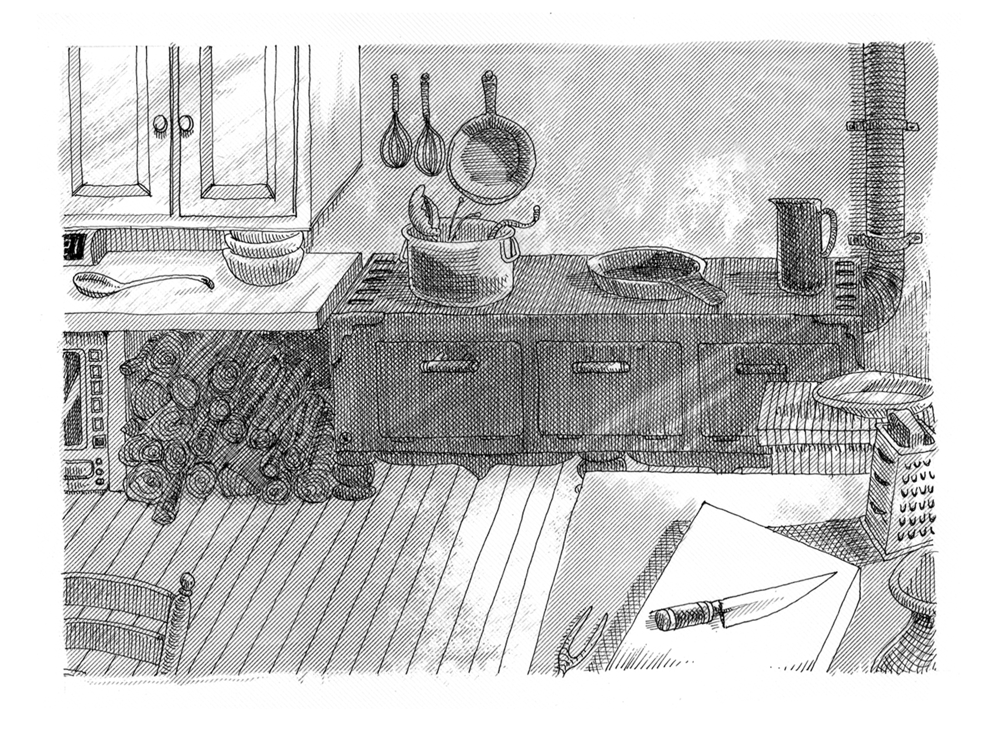
Patrick's stomach reminded him forcefully that he hadn't eaten since yesterday evening. He made his way to the kitchen, his bare feet padding softly across the wooden floor.
The kitchen showed signs of hasty activity. A large pot sat on the counter, its lid askew. Patrick approached it cautiously, reached inside, and immediately regretted the decision.
“Ouch!” he yelped, snatching his hand back as a lobster's claw pinched his finger.
The creature glared up at him with beady black eyes, very much alive and very much annoyed. Patrick stuck his wounded finger in his mouth. Someone had been preparing dinner but had clearly been interrupted.
Uncle Bill always made Sunday dinner. It had been a family tradition before Patrick's father disappeared, and Uncle Bill had kept it going. Patrick's mother had been the real cook in the family, or so his father had told him. She'd died when Patrick was six, leaving him with only fragments of memory: bread baking, a soft voice singing, and a gold coin pressed into his small hand.
Patrick backed away from the pot and grabbed a kitchen knife from the table, slipping it into his pack. Just in case.
Page 6
Patrick spotted Taro Takahashi in his garden, bent over a row of vegetables with a trowel in his weathered hands. Taro was a merchant who sold foreign trinkets down by the harbor, and his son Yoshi was Patrick's best friend.
“Mr. Takahashi!” Patrick called out, hurrying across the yard.
Taro looked up, squinting in the morning sun.
“Ah, young Patrick! You look worried. Something wrong?”
“Have you seen my uncle? Uncle Bill? He's gone missing.” Taro's expression darkened. “No see Bill today. But last night... hear big noise. Much shouting. See bad men, pirates maybe? They come into town, very quick, very angry.”
Patrick's stomach dropped. “Is Yoshi home?”
“Yoshi still sleeping,” Taro said. “Boy sleep like dead bear.” He paused, studying Patrick's face. “Your father, he good man. Very good man.”
Patrick nodded.
Pirates had come to Loland last night. That couldn't be a coincidence. Whatever had happened, it was starting to look dangerous.
Page 7
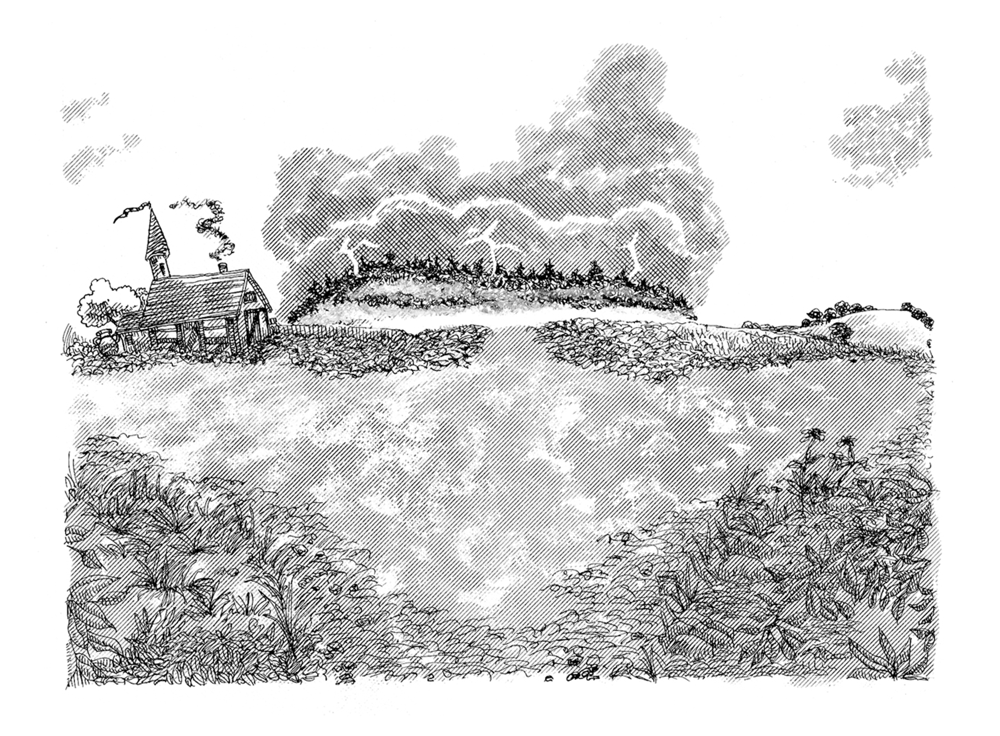
Patrick heard thunder again, louder this time, rolling across the sky from the direction of Angry Monkey Jungle. He'd heard stories about that place his entire life, whispered tales of a ferocious ape that guarded treasure so valuable that dozens of men had ventured in to claim it.
None had ever returned.
The jungle loomed dark and forbidding in the distance. His father had spoken of it with unusual seriousness: “That jungle's different, Patrick. Even I won't go there. Some dangers aren't worth the treasure.”
His father had traveled everywhere, faced pirates and storms and things he would only hint at after too much rum. If that jungle scared him, Patrick knew to take the warning seriously.
He looked around, trying to decide which direction to go. The village center lay to the east. But closer by, he noticed smoke rising from McGreen's chimney.
McGreen had traveled with his father years ago. The old explorer had filled his house with strange artifacts from distant lands. He knew Uncle Bill; perhaps he'd seen or heard something.
If anyone might have answers about Uncle Bill's disappearance, it would be McGreen.
03 · Collect
Over a hundred things to pick up.
Weapons, tools, charts, keys, coins, a paint brush, several things you won't be able to explain to anyone. Some open locked doors. Some evolve as you carry them. Some quietly unlock a side quest or a piece of backstory you'd otherwise never see.
You won't always know what an item is for when you find it. That's deliberate. Discovery is most of the game. Items are labelled with a code (A1, B4, C7) so you can find them fast on your tracker.
Keep your backpack in pencil on the page, or use the Bookpack: flip a tab open when you collect something, closed when you spend it.
What it isn't
No dice. No hit points. No restarting.
Not a gamebook
No stat sheets, no combat rolls, no timers, no character creation. There is nothing to set up. Open the book and go.
Not branching endings
One continuous story that runs for hours. Everyone reaches the same core narrative, so it can be deep and properly satisfying, more novel than flowchart.
Not a dead end
Make a wrong choice and you don't start over. You walk back out and try somewhere else. There are no losing states to punish you.